
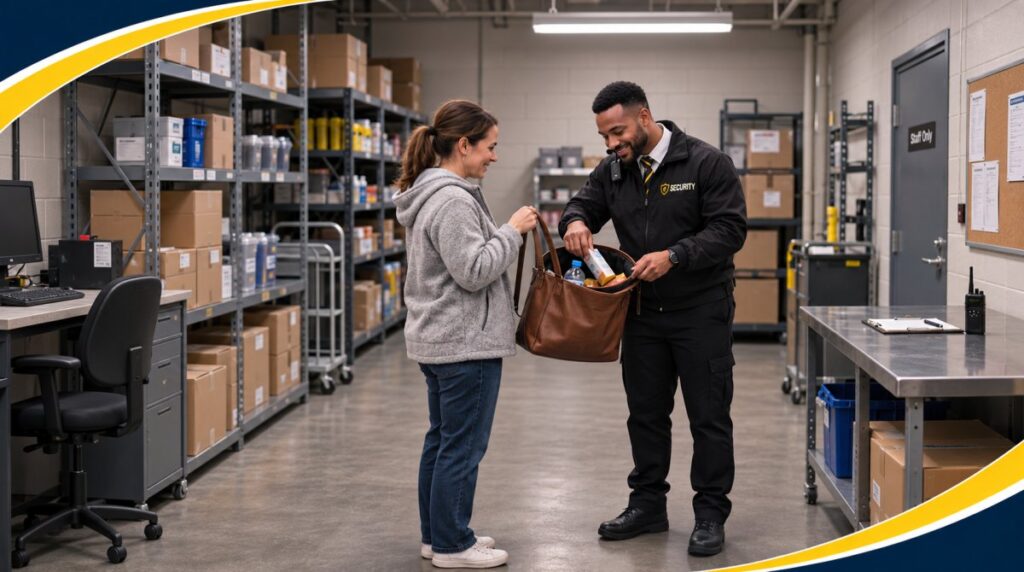
A shift in retail loss prevention is about more than catching shoplifters. Retail loss prevention officers monitor and patrol the premises, observe behaviour, support a safe store environment and respond to incidents. Much of the work also happens away from the sales floor, through handovers, incident records and follow-up on loss patterns.
That balance matters because preventing loss depends on consistent observation and sound procedures, not confrontation alone. If you’re assessing cover for a shop, you need to understand what officers do during a typical shift, how they handle suspected theft and what a useful evidence trail includes.
This article explains daily duties, incident investigation and merchandise recovery, as well as the role of clear reporting. It also outlines what to consider when choosing a team, from communication and accountability to the fit between deployment and your retail environment.
Key Takeaways
- Daily loss prevention work combines floor and entrance monitoring with briefings, incident follow-up and clear records.
- Sound apprehension decisions rely on observed behaviour and lawful procedures, not a single suspicion or indicator.
- Accurate incident reports and preserved evidence can support internal reviews and police or legal proceedings.
- Choose a team whose deployment, communication and reporting processes fit your store’s layout and risk profile.
Shoplifter apprehensions and merchandise recoveries
Effective apprehensions depend on observed conduct, clear procedures and a proportionate response. Officers first establish whether merchandise has left the store without payment.
Shoplifting indicators and response procedures
Shoplifting indicators are patterns of conduct that may suggest concealment or attempted theft, not proof on their own. For example, repeated handling of high-value goods alongside concealment may warrant closer observation. A single behaviour should not determine an approach. Officers maintain a clear view, communicate what they observe and record relevant details, including the item and its location.
The key step is confirming the person has left without paying before approaching about suspected shoplifting. This reduces mistaken confrontations and supports a consistent response. Shoplifting is prosecuted under Section 1 of the Theft Act 1968, according to The National Archives (legislation.gov.uk). A visible security presence can also deter theft without requiring an apprehension.
Detaining suspected shoplifters
Detaining a suspected shoplifter means holding them only within lawful powers and the store’s procedures. Section 24A of the Police and Criminal Evidence Act 1984 sets out the circumstances for a citizen’s arrest. It does not make every suspicion grounds for detention. Officers must assess the observed incident, follow policy and keep their response focused on safety and accountability.
The National Archives (legislation.gov.uk) states that a person may use such force as is reasonable in the circumstances to prevent crime or effect or assist a lawful arrest. Any recovered merchandise should be handled and recorded according to store procedures. Calm communication helps limit escalation while the incident is managed.
Shoplifting and organised retail crime
Organised retail crime involves linked theft activity rather than an isolated shoplifting incident. Repeated visits, coordinated conduct or recurring losses involving similar merchandise may warrant closer incident review. These patterns are indicators, not proof that individuals are acting together. Officers should document what they directly observe and distinguish evidence from assumptions.
Consistent records help management identify connections across incidents, such as repeated targeting of the same stock area. This can inform security coverage and future deterrence. If an incident suggests organised activity, officers preserve relevant observations and follow reporting procedures rather than pursuing suspects beyond their lawful role.
Investigating incidents and gathering evidence
A clear investigation separates observed facts from assumptions. Accurate evidence and reports help stores understand incidents and decide what action to take next.
Investigating incidents
An incident investigation reviews what happened, the available evidence and any relevant stock records. Officers can support management with stock discrepancy investigations, such as examining why recorded merchandise differs from a physical count. This helps establish whether a loss relates to a specific incident or an operational issue.
Officers may also interview suspects, gather evidence and work with law enforcement when necessary. De-escalation matters during these enquiries: calm conduct can help protect staff and customers and preserve the integrity of the investigation. A clear account of what officers directly observed gives managers a sounder basis for decisions.
Gathering and handling evidence
Evidence gathering means collecting relevant information about an incident while keeping its context clear. This may include officers’ observations, available CCTV footage and details about the merchandise involved. Identifying when and where an event occurred helps connect those details without treating an assumption as established fact.
For example, a stock discrepancy can be recorded alongside the relevant product and the area where it was found. Officers should distinguish what they saw from what another person reported. This helps managers assess the information accurately and supports further investigations or police enquiries.
Incident reporting
An incident report is a written account of the event, evidence gathered and actions taken. Loss prevention officers complete reports for police and legal proceedings, so clarity and factual language matter. A report should make the sequence of events understandable, rather than rely on vague conclusions about a person’s conduct.
Useful reports identify the incident, relevant merchandise, observations and follow-up. They can also help management compare recurring stock discrepancies and identify loss patterns. Those findings inform practical strategies, such as increasing oversight in an area where incidents repeatedly occur. Consistent records support review after the immediate response has ended.

What does a retail loss prevention officer do each day?
A typical shift combines monitoring, prevention and administrative work. Duties can range from observing store activity to reviewing shrinkage patterns and supporting staff.
Duties and related roles
Loss prevention officers focus on reducing retail losses through observation, checks, incident response and analysis. Entry-level associates may monitor entrances, sales areas and stock activity while supporting routine procedures. Security guards provide broader premises security; store detectives focus on observing suspicious behaviour and identifying shoplifters or organised theft groups. The roles can overlap, but their daily priorities differ.
Many UK roles require an SIA licence, particularly those involving door supervision or security guarding. Entry-level officers typically earn £22,000 to £26,000 per year; experienced officers and senior managers in large retail groups can earn £30,000 to £45,000 or more. Work demands observation, communication, accurate record-keeping and calm conduct during challenging incidents.
Qualifications vary by role. A clean DBS check is required for loss prevention officer roles, and candidates may benefit from a First Aid at Work certificate. Some roles prefer a two-year degree in criminal justice or an equivalent qualification. Relevant training and experience can support progression; management positions often require several years’ experience, and a loss prevention manager role often requires at least a two-year degree.
Searching, monitoring and CCTV rules
Searching, monitoring and CCTV are operational activities used to identify concerns, but each must follow store procedures and the officer’s role. Employee bag checks should follow consistent procedures; CCTV can help monitor activity and review incidents. Some control room-based roles require a CCTV Public Space Surveillance licence.
There is no single daily routine for every store. Officers may monitor customer or employee activity, carry out authorised checks and review relevant footage. Challenges include distinguishing suspicious conduct from ordinary behaviour, maintaining customer service and managing conflict without escalating it. These skills matter because a mistaken assumption can affect staff, customers and an investigation.
Choosing a retail loss prevention team
Choose a team by matching its deployment to your store’s risks, layout and trading activity. A shop with recurring stock discrepancies needs different coverage from a department store with several public entrances. The strongest fit combines visible presence, suitable surveillance and reliable reporting rather than relying on apprehensions alone.
Start with the operational brief. Identify where losses occur, which merchandise is affected and what times or activities are linked to incidents. A provider should use those details to assess vulnerabilities and shape coverage. For example, recurring losses near a particular display may call for focused observation and a review of staff procedures, not simply more patrols throughout the store.
Assess how the team detects and records concerning behaviour. Ask for a clear explanation of observation, escalation and incident reporting processes. A sound approach distinguishes direct observations from assumptions about criminal conduct. It should also explain how officers communicate with store management and support internal investigations. These details show whether the team can maintain consistent oversight during routine trading and incidents.
Deployment should reflect the site. Retail loss prevention teams generally have between 1 and 15 individuals, depending on the store location. That range is not a staffing formula: entrances, floor layout, opening patterns and the level of surveillance required all affect the appropriate arrangement. A defined supervisor contact and reporting route help management understand who is covering each area.
Finally, assess compliance and operational accountability alongside experience. Confirm how the team’s duties align with your store procedures, how incidents are documented and how findings inform future risk strategies. A security guard focused on general site security may not provide the same investigative emphasis as a dedicated loss prevention team. Choose the remit that fits the problem, then agree how performance and communication will be reviewed.
For tailored retail coverage, discuss retail loss prevention support for your store’s layout and risk profile.
Step Security Guarding: Corporate Security Officer
Step Security Guarding provides Corporate Security Officer services, alongside Retail Security and Loss Prevention Officers for commercial premises. Turn to the team when your store needs dedicated security coverage or when loss prevention duties should form part of a wider manned guarding arrangement.
The right service depends on your site and priorities. A retail-focused deployment centres on store security and loss prevention, while a Corporate Security Officer supports a corporate environment. Clear information about your premises, operating requirements and concerns helps shape a suitable arrangement. The aim is practical: appropriate coverage, defined responsibilities and a consistent security presence.
If your retail operation needs professional loss prevention or security support, contact Step Security Guarding to discuss your requirements.
Set a clear standard for retail cover
Use your next planning review to define what effective loss prevention should look like in your store. Set clear expectations for coverage, communication with management and how operational findings will inform future decisions. This gives retail loss prevention officers a defined purpose and helps your team assess whether the deployment supports the way the store operates.
Step Security also provides Manned Guarding, Building Site Security Guards and Construction Security Guards for other commercial environments. For retail premises, the priority is matching the security arrangement to your site and operational requirements.
Discuss your retail security requirements with Step Security Guarding and take the next step towards a well-defined plan.
Frequently Asked Questions
How do store layout and display design affect theft?
Layout influences how easily staff can see merchandise and customer activity. Placing high-theft products near tills or staffed areas can reduce opportunities for concealment. For example, a display hidden behind a tall fixture may be harder to oversee than one with clear sightlines. Retail loss prevention officers can help stores assess whether product placement and visibility support effective oversight.
Why Choose Professional Retail Security?
Professional retail security gives dedicated attention to store risks while employees focus on customers and daily operations. For example, retail loss prevention officers can maintain oversight during busy periods when staff are serving queues or replenishing shelves. A defined security presence also gives managers a clear point of coordination for incidents, concerns about store procedures and follow-up on recurring loss patterns.
What do retail loss prevention officers do in the UK?
In the UK, retail loss prevention officers can help staff understand practical prevention measures, check that security equipment functions correctly and respond to security concerns. They may also support stock discrepancy reviews, helping managers distinguish recording errors from possible losses. Their role can extend beyond a single incident: reviewing recurring patterns helps stores focus attention on vulnerable products, areas or procedures.
What legal powers do officers have when detaining suspected shoplifters?
Section 24A of the Police and Criminal Evidence Act 1984 sets out circumstances in which a person may make a citizen’s arrest. It does not give officers an unrestricted power to detain anyone they suspect. The National Archives (legislation.gov.uk) states that only such force as is reasonable in the circumstances may be used to prevent crime or effect or assist a lawful arrest.