
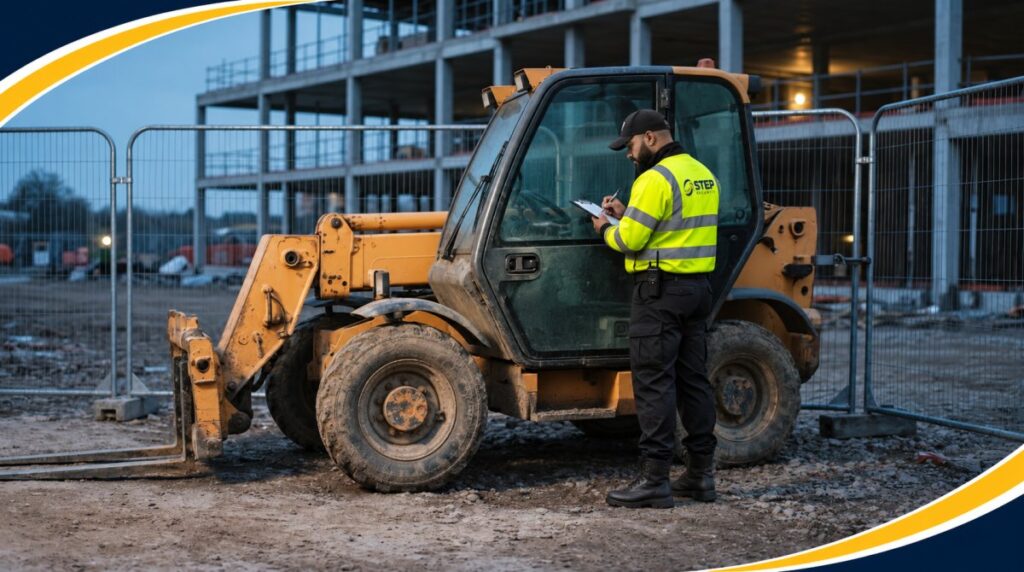
A fence alone isn’t a security plan. Effective construction site security combines perimeter controls with measures such as access monitoring, CCTV and trained security personnel. The right mix depends on the site, the assets it holds and how risks change as work progresses.
Protecting equipment, materials and site access is a practical priority, but each project has different requirements. A layered approach addresses risks such as theft, vandalism and unauthorised entry without relying on one measure to do every job.
This guide explains what security a construction site needs, how to protect its perimeter and assets, and which risks to consider. It also covers the main factors that affect costs, helping you assess the protection your project needs and decide when professional guarding, patrols or CCTV monitoring may be appropriate.
Key Takeaways
- Match guarding and patrol arrangements to the site’s layout, working hours and changing risk profile.
- Review fencing, gates and monitored access as the project develops, since new work areas can create fresh vulnerabilities.
- Prioritise tools, materials and high-value equipment for secure storage and controlled access.
- Assess costs by comparing the protection required with the site’s size, layout and operating needs.
What Security Does a Construction Site Need?
Effective construction site security uses layers rather than relying on one measure. Guards, patrols and monitored systems address different risks as site activity changes.
Security guards and patrols
Static guards provide a visible presence at site entrances and other priority areas. A continuous guarding arrangement can provide 24/7 protection where the project requires it. Mobile patrols check separate site areas and respond to emerging risks, including suspicious activity or signs of vandalism. Deployment should reflect the site layout, access points and valuable assets. A guard at the entrance, for example, can oversee arrivals whilst patrols cover less visible areas.
Guard training, licensing and vetting
Trained guards need clear instructions for site-specific tasks, such as checking access, recording incidents and reporting suspicious behaviour. Staff should understand the emergency response plan and know how to raise concerns promptly. Vetting should establish identity, relevant work history and references; licence status should also be considered for the assigned role. Look for experience suited to construction environments, where changing work areas and deliveries require disciplined observation.
Overnight and weekend guarding
When construction work stops, guards or mobile patrols can remain active to protect the site. After-hours arrangements should account for quieter periods, closed access points and equipment left in place. Bright lighting around exposed areas and switched-on CCTV can support detection, while a guard provides a visible deterrent and can report incidents. Weekend cover should reflect the site’s operating schedule, planned deliveries and areas where work continues.
CCTV, alarms and monitored security
CCTV, alarms and monitoring can form part of a coordinated security plan: cameras help detect activity, alarms signal an event, and remote monitoring supports assessment and response. Guards and mobile patrols can provide a physical response, each with a distinct role from CCTV. UK law does not prescribe one combination of guards, CCTV and alarms for every construction site, so arrangements should reflect the site and its applicable duties.
Perimeter and asset protection
Perimeter controls should evolve as projects develop. New buildings, equipment stores and temporary access routes can create vulnerabilities that weren’t present earlier. Use strong fencing, barriers and locked gates to deter unauthorised entry, then review their position as the site layout changes. Limit entry and exit points where practical, and monitor each designated route to make activity easier to oversee.
The right arrangement depends on the site’s shape, access requirements and project stage. Check for gaps, unstable sections and gates that don’t close securely. A clear perimeter helps teams identify incidents and direct cameras or staff towards the affected area.
Lighting and surveillance support the physical boundary. Floodlights can illuminate the perimeter, while motion-detection lights can expose activity at night. Position cameras to cover entrances, exits, storage areas and key traffic routes. A combined plan might include fencing, CCTV, turnstiles, alarms and trained site operatives, with each measure addressing a different vulnerability.
Access control should create a clear record of who enters and leaves. A security provider can manage visitor sign-in by recording arrivals, checking their authorised access and monitoring departures. ID badges, access cards or biometric systems can support entry controls and help site management see who is on site. Keep controls aligned with delivery routes, staff entrances and changing work zones.
Protect tools and materials by securing them in lockable containers or with strong chains, preferably within camera coverage. Restrict access to high-value equipment, and mark items to aid identification after an incident. For coordinated construction site access control, align the perimeter, entry procedures and asset protection with the project’s layout and changing infrastructure.
Construction-site theft, vandalism and trespassing risks
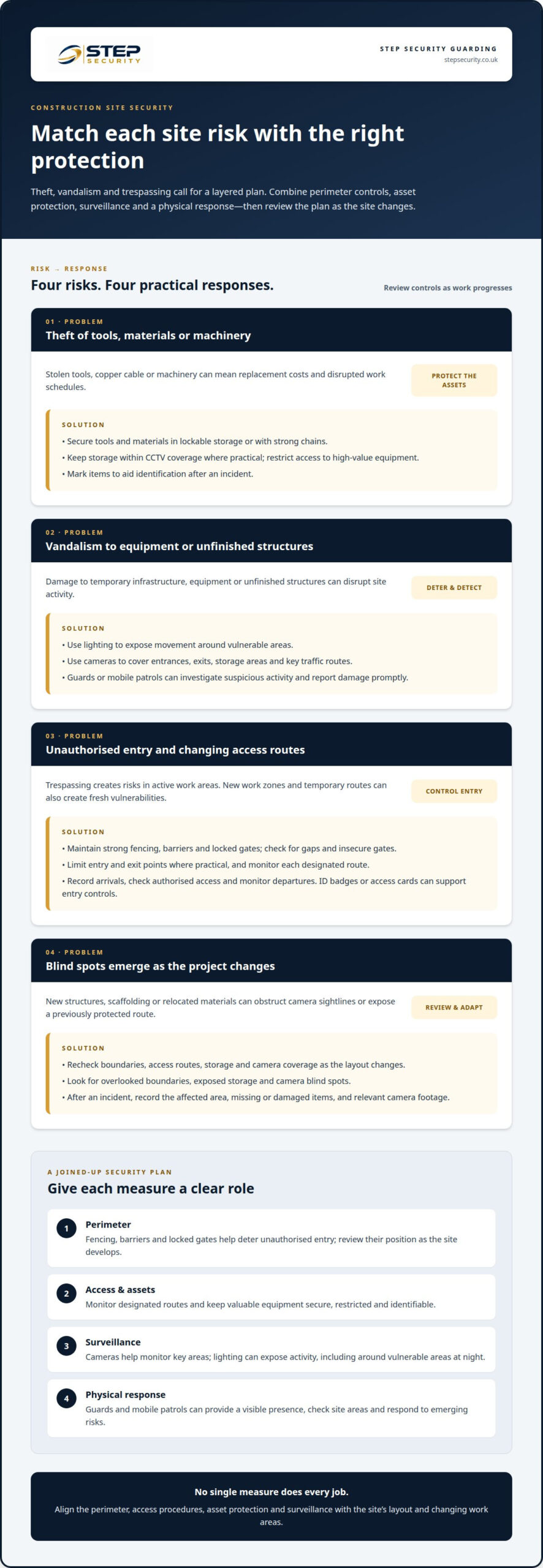
Theft of tools, copper cable or machinery can mean replacement costs and disrupted work schedules. Vandalism can damage temporary infrastructure, equipment or unfinished structures. Trespassing also creates risks when unauthorised people enter active work areas. Regular risk assessments help identify exposed storage, overlooked boundaries and access routes that change as construction progresses.
Prevention starts with controlling valuable assets. Keep tools and materials in lockable storage after work, or secure them with strong chains. Place storage within CCTV coverage where practical, restrict access to expensive equipment and mark items for easier identification. These steps help teams spot missing assets and provide clearer information when reporting an incident.
Surveillance should cover places people might approach or exploit. Cameras can monitor entrances, exits, storage areas and key traffic routes; remote CCTV monitoring lets teams watch the site from a distance. A visible camera may also discourage unauthorised activity. Review coverage for blind spots, especially when new structures, scaffolding or stored materials obstruct sightlines.
Anti-vandalism measures should address both opportunity and detection. Lighting can expose movement around vulnerable areas, while guards or mobile patrols can investigate suspicious activity and report damage promptly. Review security arrangements as the project changes instead of assuming the original layout remains effective. For example, relocating materials may leave a previously protected route exposed or create a new access point.
After an incident, clear records support an informed response. Note the affected area, missing or damaged items, and any relevant camera footage. Regularly review equipment marking, storage controls and surveillance coverage to identify recurring vulnerabilities. This joined-up approach helps limit disruption, improve detection and keep prevention measures aligned with the site’s current risks.
Construction site security costs
A construction project’s security budget depends on the protection it needs, not a standard package. Site size, operating hours, access points, asset value and changing risks all shape the required service. A single controlled entrance may need a different arrangement from a large site with several work zones, deliveries and isolated storage areas. Assess these factors together before deciding how to allocate the budget.
Some physical measures have a clearer reference cost. The final amount depends on the perimeter length and how long the boundary is required. As the project changes, new buildings or storage areas may require sections to be moved or added, affecting the fencing budget.
Other costs depend on the deployment. Mobile patrols, static guarding, CCTV monitoring and access control address different needs. The number of access points, coverage required, operating schedule and site layout all influence the solution. Combining measures can help target spending: for example, use controlled access at the main entrance and patrols to cover remote areas. Avoid paying for overlapping measures that don’t address a distinct risk.
Factor in the potential cost of disruption as well as equipment and service budgets. Construction site crime costs the UK industry up to £800m each year. Theft can mean replacing tools, cable or machinery, while an incident may delay work. Regular risk assessments help prioritise exposed assets and direct resources towards the site’s most vulnerable points.
The price of a security service depends on the case and is given after a quote request. Key factors include site layout, required coverage, working hours, access arrangements and the protection measures selected. For a tailored assessment of your project’s guarding and access requirements, request a construction security quote.
Step Security Guarding: Construction Security Guards
Step Security Guarding provides Construction Security Guards for projects that need a professional presence on site. Manned Guarding can support site access, monitor activity and help deter unauthorised entry. The deployment can be shaped around the site’s layout, operating requirements and protection priorities.
Building Site Security Guards may be appropriate when equipment, materials or changing work areas need dedicated oversight. A Security Guard Service also gives site management a clear point of contact for security concerns and incident reporting. Consider arranging guarding when the project’s risk assessment identifies gaps that physical security can address.
For guarding support tailored to your construction project, contact Step Security Guarding.
Plan security around the next project phase
As a construction project moves from groundwork to fit-out, its access routes, storage needs and exposed areas can shift. Treat construction site security as an operational plan that evolves with the work, rather than a fixed arrangement. Reviewing security at each major phase can help keep protection aligned with changing site conditions.
Step Security Guarding provides Manned Guarding, Building Site Security Guards and Construction Security Guards. These services support sites that need a visible security presence and structured oversight. Identify the areas requiring attention and the guarding approach that best suits the project’s operating needs.
Clear priorities make it easier to put a practical plan in place. Contact Step Security Guarding to discuss construction security for your site. A considered approach helps you move forward with greater confidence and keep security focused on the project’s needs.
Frequently Asked Questions
How can a security provider monitor multiple construction sites simultaneously?
Remote CCTV monitoring and scheduled or random mobile patrols can support security across separate locations. Shared incident records help track alerts, patrol findings and unresolved issues at each site. For example, a camera alert at one project can be logged for follow-up while a patrol checks another location. Clear escalation procedures help direct the appropriate response without treating every alert as the same risk.
How can a security provider handle after-hours cover?
After-hours protection can combine on-site guards, mobile patrols, CCTV monitoring and key holding with alarm response. The arrangement should match the site’s overnight risks and operating pattern. For instance, a vacant site with an alarm can use remote monitoring and a defined response process, while a busy project with equipment deliveries may need a guard to oversee access. Clear incident records support follow-up.
What are the main security risks on UK construction sites?
The main risks include theft of tools, materials, copper cable and machinery, as well as vandalism and unauthorised entry. These incidents can lead to replacement costs and work interruptions. Risk can also shift during a project: a newly opened entrance or relocated storage area may create an exposure. Regular reviews help identify changes and ensure security arrangements still address the site’s current conditions.
What security measures should a professional provider recommend for a construction site?
A construction site security plan should reflect the project’s layout, assets and operating hours. A tailored arrangement may include guards at key access points, mobile patrols, CCTV monitoring and managed visitor access. For example, a site with several separate work areas may need different coverage from one with a single controlled entrance. Link each measure to a specific risk and include a process for recording and escalating incidents.
How much does site security cost in the UK?
There isn’t one total cost that suits every UK project. The main factors include site size, guarding hours, number of access points, patrol frequency and the monitoring required. The cost of physical measures, such as fencing, also depends on boundary length and how long the fencing is needed. Step Security Guarding provides a tailored, free, no-obligation quote based on the required arrangement.
How much do security guards cost per hour in the UK?
Guarding costs depend on the cover required, including shift duration, working pattern, site responsibilities and access arrangements. For construction site security, a fixed hourly figure can’t account for these project-specific factors. Step Security Guarding provides a tailored quote for your guarding requirements, rather than a universal rate. Include the site’s operating hours and priority duties when requesting a quote, so the proposed cover reflects the deployment needed.