
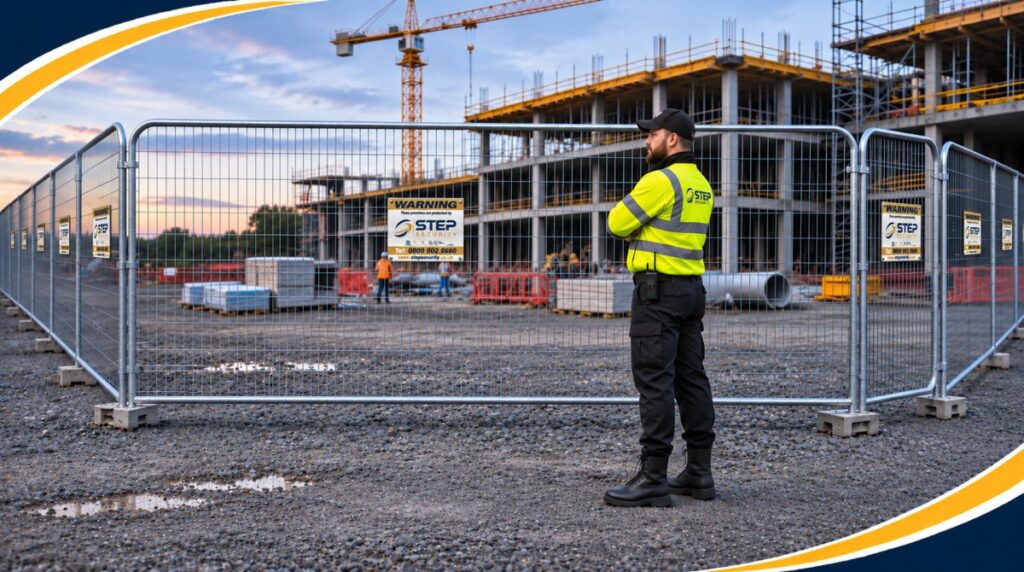
An open tool store can leave a construction site exposed overnight. To prevent construction site theft, a security provider should ensure tools are locked away, restrict unauthorised access and maintain oversight of storage areas and site entrances. Lighting, CCTV and a planned security presence can support these controls.
Keeping tools secure is essential, but it is only one part of protecting a site. Large layouts, multiple access points and changing delivery arrangements can create gaps in oversight, so security should reflect how the site operates.
This guide explains how professional construction site security can help protect tools overnight, monitor a site remotely and control access. It also provides a practical theft-prevention checklist, from recording equipment and securing storage to reviewing controls when site conditions change.
Key Takeaways
- Secure tools and equipment in lockable storage overnight, with asset records helping identify what belongs on site.
- Plan CCTV tower coverage around vulnerable areas so remote monitoring can support oversight where permanent infrastructure is limited.
- Use controlled entry and consistent sign-in procedures to keep site access accountable for staff, contractors and vehicles.
- Review security arrangements as the site changes, including its layout, workforce and delivery schedule.
1. What professional security measures help prevent theft on a construction site?
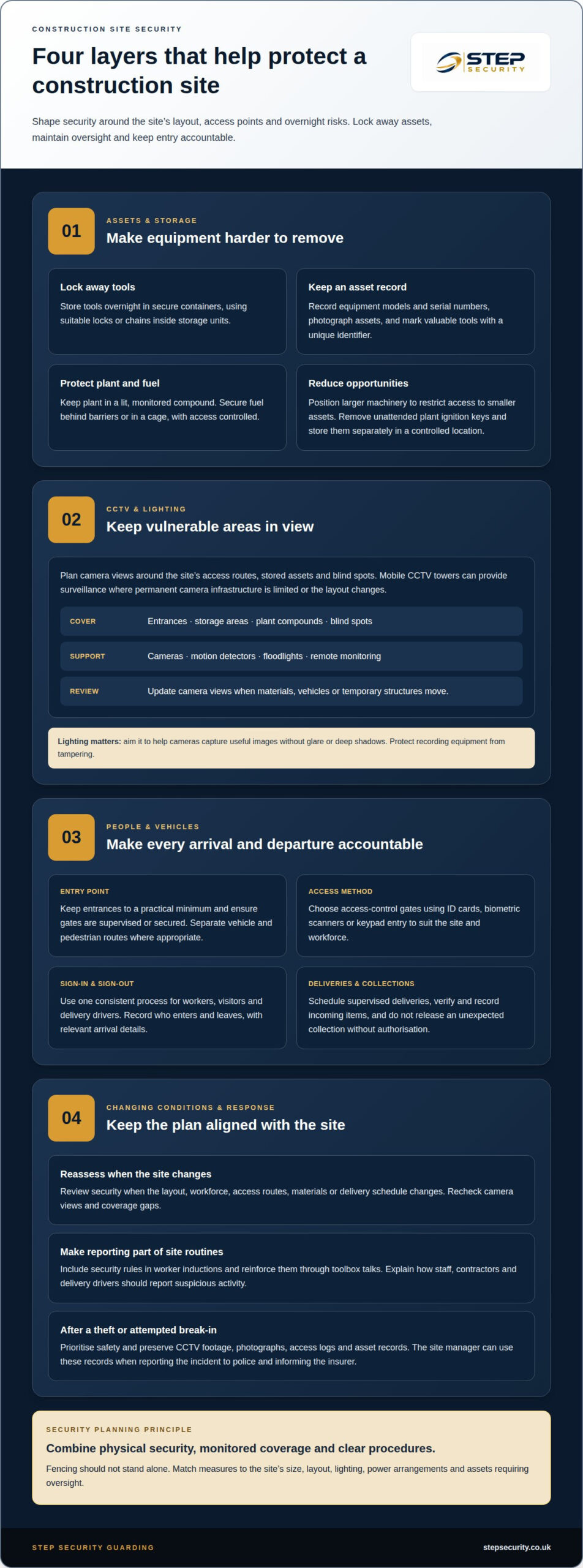
Across the UK mainland, effective construction site security starts with a plan shaped around each site’s layout, access points and overnight risks. Construction sites can hold copper wiring, timber, tools and heavy plant, often across exposed areas. Record equipment models and serial numbers, photograph assets, and mark valuable tools with a unique identifier. Lock tools away overnight in secure containers, using suitable locks or chains inside storage units.
Keep plant in a lit, monitored compound, and position larger machinery to restrict access to smaller assets. Remove ignition keys from unattended plant and store them separately in a controlled location. Secure fuel storage behind barriers or in a cage, with access controlled. These measures protect materials and make unauthorised removal more difficult.
Position cameras to cover entrances, storage areas, plant compounds and blind spots. Protect recording equipment from tampering, and aim lighting to support surveillance without glare or deep shadows. Motion notifications can help staff assess activity, but camera coverage needs to reflect the site’s changing layout.
Include site security rules in worker inductions and reinforce them through toolbox talks. Explain how staff, contractors and delivery drivers should report suspicious activity, and keep a consistent record of materials moving onto and off the site. Clear procedures help teams identify incidents and raise concerns promptly.
Risks and insurance terms depend on the agreed security duties, site exposure and incident-reporting responsibilities. Align contracts with relevant cover and its exclusions rather than assuming one arrangement suits every construction site.
After a theft or attempted break-in, prioritise safety and preserve CCTV footage, photographs, access logs and asset records. The site manager can use these records when reporting the incident to police and informing the insurer.
2. Mobile CCTV towers and remote monitoring
Mobile CCTV towers provide surveillance where a construction site lacks permanent camera infrastructure. A tower can combine cameras, motion detectors and floodlights, allowing remote monitoring of temporary work areas, plant compounds or changing site sections. This makes them useful when the layout shifts during a project and fixed coverage no longer reaches vulnerable points.
For a UK site, a security provider should match camera positions to access routes, stored assets and blind spots. Remote monitoring can identify movement, let personnel assess whether it appears suspicious, and support a measured response. Depending on the system, responses may include voice warnings, flashing lights, contacting keyholders or notifying police when appropriate.
Plan CCTV and alarm arrangements as connected parts of site security. Monitored cameras can provide visual context for an alert, while an audible alarm may draw attention to unauthorised entry. Lighting should help cameras capture useful images overnight without glare or deep shadows. Review camera views when materials, vehicles or temporary structures move.
Perimeter fencing is important, but it should not stand alone. Combine it with CCTV or other security measures, and prioritise points where vehicles or pedestrians could enter. A CCTV tower can monitor areas without permanent infrastructure, while a guard or mobile patrol can provide physical oversight where camera views are limited. This layered approach makes unnoticed access more difficult.
The right recommendation depends on site size, layout, lighting, power arrangements and the assets requiring oversight. A professional assessment should identify coverage gaps, define how monitoring personnel handle alerts, and clarify when keyholders or police are contacted. For sites requiring dedicated oversight, construction site CCTV monitoring can form part of a wider security plan.
3. Access control for staff, contractors and vehicles
Controlled entry helps limit access to people who need to be on site. Keep entrances to a practical minimum, and ensure gates are supervised or secured. On a large construction site, separate vehicle and pedestrian routes can make movement easier to oversee. A clear entry point gives security personnel a defined place to check arrivals and helps prevent construction site theft.
Access-control gates can use ID cards, biometric scanners or keypad entry. The right method depends on the site layout and how its workforce operates. For example, check a contractor arriving for a scheduled task against the site’s authorised access arrangements. Restricting entry can reduce unnecessary traffic and help protect valuable equipment.
Use one consistent sign-in and sign-out process for workers, visitors and delivery drivers. Record who enters and leaves, along with relevant arrival details, so the site manager can account for activity. Current entry records can help clarify who was present if damage or a security incident is discovered, supporting efforts to prevent construction site theft.
Delivery controls matter at the gate. Schedule deliveries for times when someone can supervise unloading, verify incoming items and record materials arriving on site. Do not release an unexpected collection without authorisation. Clear handover procedures reduce confusion between contractors and help prevent equipment or materials leaving without approval.
Access arrangements should reflect the perimeter, working areas and project changes. A new gate, altered vehicle route or changing workforce can create gaps if procedures stay the same. Security personnel can apply entry procedures consistently, identify unusual activity and escalate concerns to the site manager. These controls support construction site security without disrupting authorised work.
4. Construction site theft prevention checklist for security providers
A useful checklist turns site risks into assigned security measures. The Health and Safety Executive advises construction sites to manage defined boundaries, exclude unauthorised people and secure the site adequately at the end of the working day. A provider should assess roads, blind spots, working hours and previous local incidents before setting coverage.
- Review fencing, gates and perimeter access. Identify weak points, then coordinate guarding or patrol coverage around exposed approaches.
- Check how assets are stored overnight. Keep tools and materials in locked containers or buildings, away from the perimeter, and schedule materials close to when they are needed.
- Secure plant when unattended. Remove ignition keys and store them separately in a controlled location. Consider alarms, immobilisers, CCTV and tracking for high-value machinery, while retaining basic physical controls.
- Assess fuel protection. Confirm tanks have secure caps and anti-siphon devices, with access controlled through suitable barriers or other measures.
- Review deliveries and collections. Arrange deliveries for supervised periods, record items moving onto and off site, and prevent unexpected collections without authorisation.
- Set a patrol and monitoring plan. Use scheduled or random mobile inspections to cover areas where fixed cameras have limited visibility.
Checklist completion is not a one-off task. The provider should review controls whenever the layout, workforce, delivery schedule or project stage changes. For example, a new storage area may create a blind spot or alter vehicle access. Updating patrol routes and monitoring coverage keeps the security plan aligned with site activity.
These measures work best as a coordinated plan, not isolated equipment. Arrange construction site security support to align site assessments, patrols and physical protection with operational risks.
Step Security Guarding: Construction Security Guards
Step Security Guarding provides Construction Security Guards to help protect sites where valuable tools, materials and plant remain exposed after working hours. On-site officers can monitor activity, challenge unauthorised access and follow agreed procedures. This is a practical next step when fencing, cameras and access controls need coordinated on-site oversight.
Building Site Security Guards and Manned Guarding can support site entry controls, patrols and incident reporting. Loss Prevention Officers can also help address risks involving assets and materials. Plan deployment around the site layout, access points, storage areas and working arrangements so security supports operational needs. Contact Step Security Guarding to discuss construction site security for your project.
Set up security that fits your site
As a project develops, security needs can change with the workforce, site layout and delivery activity. Treat overnight protection as an operational decision, not a fixed setup. A coordinated plan helps prevent construction site theft by keeping responsibilities clear and measures aligned with current site conditions.
Step Security Guarding provides Construction Security Guards, Building Site Security Guards and Manned Guarding. The right arrangement depends on the site’s working requirements and the level of on-site oversight needed. Clear responsibilities help security personnel work alongside site management and maintain continuity as project activity changes.
Identify where professional oversight would add value, such as at site access points or during overnight operations. Share those priorities with Step Security Guarding to discuss your site’s requirements.
Contact Step Security Guarding to discuss your construction site security needs and take a clear next step towards protecting your project.
Frequently Asked Questions
How should a security provider ensure tools are stored overnight?
Give each overnight storage area a clear access procedure and close-down check. Before the site empties, guards can confirm tool stores are locked, note visible damage and report exceptions to the site manager. A controlled key handover keeps responsibility clear between shifts. Aligning the process with the asset register helps identify missing equipment promptly.
What professional security measures help prevent theft on a construction site?
Use a site-specific combination of physical guarding, monitored surveillance and controlled entry. Assess exposed boundaries, valuable assets, work patterns and delivery activity, then set patrol zones and escalation steps. For example, a guard can investigate an access concern in person, while remote CCTV monitoring helps personnel assess activity in areas without a fixed guard.
Why Does Construction Fuel Theft Happen?
Fuel theft can occur because tanks and bowsers hold valuable, usable fuel, while remote sites may have little foot traffic or few neighbouring properties. Unattended storage and accessible fuel points can increase exposure. Theft can disrupt plant operations as well as remove fuel, so security planning should consider tank location, controlled access and checks suited to overnight site activity.
What are the most effective professional services for preventing theft on a construction site?
Professional security services work best when each has a defined role. Manned guarding provides an on-site presence; mobile patrols inspect agreed areas, while remote CCTV monitoring supports observation where personnel are not physically present. Key holding and alarm response can provide attendance after an alert. Coordinate these services around the site’s layout, operating hours and risks.
How should a security provider set up construction site fencing, gates and lighting to deter theft?
The Health and Safety Executive advises sites to manage defined boundaries, exclude unauthorised people and secure the site adequately at the end of work. Keep entrances to a practical minimum, with gates supervised or secured. Position lighting to support clear camera views without glare or deep shadows, and combine fencing with surveillance or other measures rather than relying on a barrier alone.
How can a security provider secure and mark tools, plant and materials on a building site?
Create an asset record linking each item to its make, model, serial number, photograph and identifying mark. A unique mark, such as an engraved identifier, can help distinguish tools if recovered. For plant, record tracker details where fitted and maintain controlled key custody. Log material deliveries and authorised collections against site paperwork to help managers investigate discrepancies.